Baker County commissioners hear concept for housing on county parcel
Published 1:49 pm Thursday, March 5, 2026
Commissioners plan public town hall later in March to hear from residents
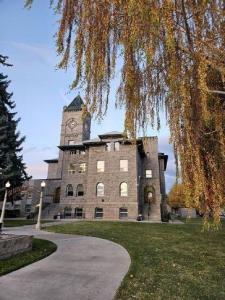
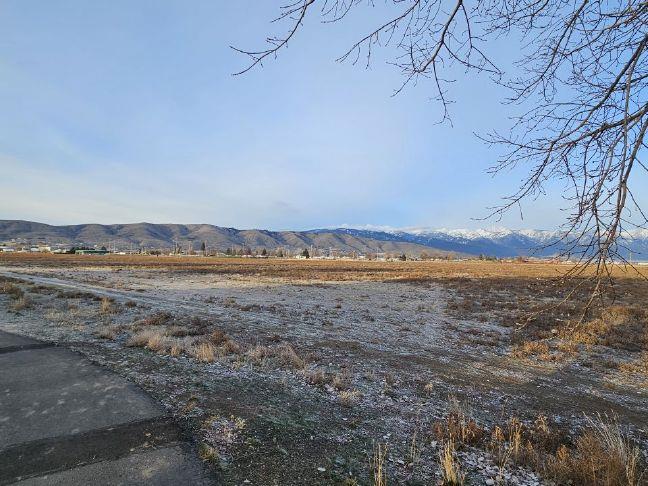
BAKER CITY — Baker County commissioners heard about potential ways to build a variety of housing on the 62-acre parcel the county owns just south of Hughes Lane in north Baker City.
During a one-hour work session Wednesday afternoon, March 4, at the courthouse, the three commissioners listened to a presentation from Nick Green, managing director of R3, a regional, state-funded consortium formed in 2023 that seeks to boost housing in rural Oregon through partnerships with private developers and builders.
Commissioners didn’t make any decisions Wednesday, as the sole purpose of the work session was to hear the presentation.
Commissioners plan to schedule a public town hall, probably later in March, to gather ideas from residents about how the county could use the land, whether for housing or another purpose such as an event center or gym for sporting events.
Green told commissioners that R3 has contributed money or technical support to several projects in Baker City, totaling about $2.3 million, including the Silver Birch subdivision between Birch Street and Interstate 84. Green said R3 is also working on housing developments in John Day and Burns.
Green said a bill in the Oregon Legislature includes $3 million for R3.
Green told commissioners Wednesday that the county parcel is “a beautiful piece of property for residential development” with “tremendous potential.”
Green said the county has multiple options for developing the property, including auctioning lots to builders and requiring that they build a home within two years, or working with builders to construct homes and signing an agreement with R3 to handle the financing for buyers.
R3 can also oversee the design, permitting, hiring contractors to build streets and do other pre-construction tasks, he told commissioners.
Green said the development could include a mixture of single-family homes and multi-family dwellings such as duplexes.
He told commissioners that R3 focuses on “middle income workforce housing” — affordable for people with incomes from 80% to 120% of the local average, with a starting price in the low to mid $200,000 range.
The goal, Green said, is to use “just enough” public money through R3’s allocation from the state to make it feasible for builders to construct housing. He said he prefers a ratio of about 85% private investment to 15% public.
He told commissioners he believes the county has a “viable project” on its property, and that a phased development, with an average of 10 to 12 housing units built per year, would benefit local builders.
“We’d love to work with you,” Green said.
Green said the $2.3 million the county received from the state a few years ago, money that county officials say could be used to install water or sewer lines and build other infrastructure, helps make the development feasible.
County chair supports housing plan
Commission Chairman Shane Alderson said he thinks a housing development on the county property would benefit local employers who struggle to fill vacancies, or expand, because prospective workers can’t find housing.
Alderson said during the commission’s Aug. 6, 2025, meeting that although he initially supported building an event center on the property, he no longer thought that project was feasible and had decided that workforce housing was the best option.
Commissioner Michelle Kaseberg said Wednesday that she is worried about the possibility that a housing development overseen by two public entities — the county and R3 — would “compete” with the private building industry.
“We need to be very careful,” Kaseberg said. “This has been a very hot topic.”
Green replied that if commissioners are concerned about competing with private industry, the county could sell lots directly to developers.
Kaseberg, in an interview Thursday morning, March 5, said she remains concerned about how a housing development on the county property, supported by R3, might affect local builders.
“I’m struggling with that piece of it,” Kaseberg said.
She acknowledged that a housing development could potentially benefit local contractors as well as creating new housing.
“I’m not against (a housing development), but I’m also not against a small event center,” she said. “I have a lot more research to do.”
Commissioner Christina Witham asked Green about the possibility of homeowners in the development wanting to use their properties as vacation rentals.
Green said the county could prohibit that use, or require that any homes be occupied by the owner for at least five years.
Contractor, and former county chair, objects to proposed housing development
At the end of the work session, Bill Harvey, a building contractor who was commission chairman when the county bought the property in 2022, asked when the town hall would be scheduled.
Harvey objected to commissioners not allowing public comments during the work session.
Commissioner Christina Witham noted that the published agenda for the session stated that commissioners wouldn’t take public comment.
Harvey, who is running against Alderson for commission chairman this year, uttered an expletive before leaving the room. Whitney Rilee is also running for that office.
In an interview in his Baker City office after the work session, Harvey said he believes a housing development on the county property, managed by the county and R3, would “wipe out” local contractors.
Harvey, who has been a contractor in Baker County for 46 years, contends that a housing development on public property, supported by public dollars, is an “unfair practice” and that builders couldn’t compete with the subsidized project.
“County government should not be in the development housing market,” Harvey said.
He said he believes just one to three contractors would benefit from a housing development on the county property, and that the others would be left with few or no customers.
“You cannot compete with that,” Harvey said, referring to a subsidized development. “We should not have to compete with that. There’s nothing fair about this. You’re crushing my industry and you want me to sit on my hands.”
Alderson said in an interview Thursday morning, March 5, that he disagrees with Harvey’s assessment.
Alderson contends that a housing development on the Hughes Lane property would be “totally beneficial” to the local building industry.
“I will fight tooth and nail to make it as fair as possible” local contractors, Alderson said.
“I don’t think that this is going to create an unfair environment for any of our contractors,” he said.
Dan Garrick, a Baker City home builder who attended Wednesday’s work session, said in an interview on Thursday, March 5, that he doesn’t think the sort of housing development Green described would benefit more than a few local contractors.
Garrick said he is concerned that some customers who might consider hiring a local contractor to build a custom home would instead choose a lower-priced home on the county property.
Garrick and Harvey both said they’re skeptical that many local workers could afford homes or other housing as Green discussed, even with public subsidies for the development and, potentially, the construction.
Harvey said his concern about the commissioners considering a housing development on the Hughes Lane property is one reason he decided to run for his former office, after retiring at the end of 2022.
County acquisition, voters approve ballot measure
When Harvey and commissioners Mark Bennett and Bruce Nichols decided in 2022 to buy the property their concept was to build a multipurpose event center. The property borders the Baker Sports Complex on the west.
In the summer of 2025, after commissioners voted in May to buy a 3.15-acre property from St. Francis de Sales Cathedral just south of the Hughes Lane parcel, a few residents in an adjacent neighborhood complained about the purchase and the potential extension of College Street along the west side of the county property.
Sharon Bass, who lives just west of where College Street ends now, filed a petition for a ballot measure requiring the county to get voter approval for any event center in the county that would cost $1 million or more in “total construction costs and also meets any of these criteria:
• Might require an increase in taxes, including the development of a special taxing district on construction or in the future.
• Might require the county to hire full- or part-time employees, whether permanent or temporary.
• Might result in using condemnation (eminent domain) to acquire property.
In the Nov. 6, 2025, election, Baker County voters, by a margin of 84% to 16%, approved the ballot measure.
Harvey said on Wednesday that he believes an event center of some kind is still a viable option for the property.
About Jayson Jacoby | Baker City Herald

Jayson has worked at the Baker City Herald since November 1992, starting as a reporter. He has been editor since December 2007. He graduated from the University of Oregon Journalism School in 1992 with a bachelor's degree in news-editorial journalism.
 More by Jayson Jacoby